Single Axle vs. Tandem Axle Utility Trailer: Which One Do You Actually Need?
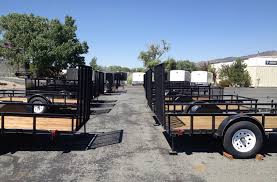
By Workhorse Trailers | Northern Utah Utility Trailers & Custom Builds
Walk onto any trailer lot and ask which axle configuration you should buy, and you will likely get an answer shaped more by what is in stock than what actually fits your situation. It is one of the most common questions we hear at Workhorse Trailers, and the honest answer depends on a handful of factors that most buyers have not thought through yet: what you are hauling, how often, where you are driving, and how much tongue weight your truck can comfortably manage. Get those details right and the axle question answers itself.
This is not a close call for every buyer. Some people clearly need a tandem. Others are paying for extra axle capacity they will never use. The breakdown below covers the practical differences between single and tandem axle utility trailers, including how Utah’s terrain and climate play into the decision, so you can walk in knowing what you actually want.
What the Axle Configuration Actually Changes
A single axle trailer has one axle positioned roughly in the center of the trailer frame. A tandem axle trailer has two axles set close together toward the rear. That physical difference cascades into weight capacity, ride stability, tire load, turning radius, and the way the trailer handles at highway speeds. None of those differences are trivial, which is why the choice matters.
Single axle utility trailers typically carry between 2,000 and 5,000 pounds of payload depending on build specs. Tandem axle configurations generally start around 7,000 pounds of capacity and can be built well beyond that for heavier commercial applications. The rated capacity is the number printed on the trailer’s certification label, but the practical usable capacity depends on what your tow vehicle is actually rated to pull and how the load is distributed on the deck.
When a Single Axle Trailer Is the Right Call
Single axle trailers are lighter, simpler, and less expensive to buy and maintain. For a lot of Utah homeowners and weekend users, that combination makes them the practical choice. If you are hauling yard waste, landscaping debris, a lawnmower, a motorcycle, or a side-by-side to a trail, a well-built single axle handles those loads cleanly without the added weight and rolling resistance of a second axle following you down the highway.
The maneuverability advantage is real and underappreciated. Single axle trailers back into tighter spaces, navigate narrow property gates, and turn more responsively than their tandem counterparts. If you are regularly maneuvering into a side yard, backing through a barn gate, or threading through a campsite, the shorter wheelbase and reduced rear overhang on a single axle makes those moves noticeably less frustrating.
Tire maintenance is simpler too. Two tires instead of four means fewer to rotate, inspect, and replace. For an owner who does light-duty seasonal use and stores the trailer the rest of the year, that lower maintenance footprint is a legitimate factor.
The load limit is the ceiling that tells you when a single axle stops being the right tool. If your payload consistently approaches or exceeds 4,000 pounds, or if you haul irregularly shaped loads that create uneven weight distribution, you are pressing against the practical limits of most single axle builds. That is when the tandem conversation starts.
When You Should Step Up to a Tandem Axle
The case for tandem axle trailers comes down to three things: heavier loads, highway stability, and a built-in safety margin that matters more than people realize until they need it.
If you are hauling a skid steer attachment, a loaded ATV alongside equipment, stacked lumber, or any payload that pushes past 5,000 pounds, a tandem axle distributes that weight across four tires instead of two. That distribution reduces the load on each individual tire, lowers the heat buildup that causes blowouts on long highway runs, and keeps the trailer frame from flexing under concentrated stress points.
The highway stability difference is noticeable as soon as you get above 55 mph with a loaded trailer. Tandem axles resist sway more effectively because the spread between the two axles creates a longer contact footprint with the road. A loaded single axle trailer at 70 mph on I-15 between Ogden and Salt Lake can develop a pendulum sway that demands constant steering correction. The same load on a tandem tracks straighter with less driver input.
The safety margin point is practical rather than theoretical. If a single axle trailer suffers a tire blowout, you lose half your rolling support immediately. The trailer drops, control degrades fast, and you are pulling over regardless of where you are. A tandem axle trailer with a blown tire still has three functioning tires. You will feel the difference, but you can control the vehicle and reach a safe stop without the load pitching or the frame dragging.
Utah Terrain and Why It Changes the Math
Utah trailer buyers deal with conditions that do not show up in generic buying guides. Mountain grades, canyon switchbacks, temperature swings from valley floors to elevation, and long stretches of high-speed interstate all put specific demands on trailer components that are worth thinking through before you buy.
Descending grades like Parley’s Canyon, Sardine Canyon, or the approaches to southern Utah put sustained brake heat into a loaded trailer. Single axle trailers have one set of brakes working against the full load. Tandem axle trailers spread that braking demand across two axles, which reduces brake fade on long descents and extends brake life. If you are regularly running loaded trailers down canyon grades, that difference shows up in your maintenance schedule and in how the rig handles on the way down.
Utah’s temperature range also affects tire performance. Summer pavement temperatures in the Salt Lake Valley and Washington County regularly exceed 150 degrees Fahrenheit. Tires on a heavily loaded single axle running at highway speeds in that heat build pressure faster and are closer to their thermal limits than the same tires on a tandem spreading the load. For buyers who haul primarily in summer heat over long distances, that is a real factor.
For recreational users headed to off-road destinations like Sand Hollow, the Paiute ATV Trail, or the trails around Moab, the tighter turning radius and lighter tongue weight of a single axle often makes more sense on the approach roads and staging areas. Tight switchbacks and gravel two-tracks reward trailers that respond quickly and do not drag a wide rear footprint through every corner.
Quick Reference: Matching Your Use Case to the Right Axle
Single axle utility trailer is likely the better fit if you are:
• Hauling under 4,000 lbs consistently, such as a lawnmower, motorcycles, UTVs, or yard debris
• Frequently backing into tight spaces, gates, or properties with limited maneuvering room
• Towing with a midsize truck or SUV where tongue weight is a real constraint
• A weekend or seasonal user who does not need heavy-duty capacity year-round
Tandem axle utility trailer is likely the better fit if you are:
• Regularly hauling over 5,000 lbs, including equipment, large loads, or multiple heavy items
• Running at highway speeds on I-15, I-80, or other high-speed Utah corridors with a loaded deck
• Descending canyon grades regularly with significant payload on board
• A contractor, landscaper, or commercial user who puts consistent heavy miles on the trailer
Cost, Maintenance, and the Long-Term Picture
Single axle trailers cost less upfront. The gap varies by build quality and specs, but you are generally looking at a meaningful difference in purchase price between comparable single and tandem configurations. For a buyer whose use case genuinely fits a single axle, that savings is real and not worth ignoring.
Over time, the maintenance picture is more nuanced. Single axle trailers wear their two tires faster under heavy loads because each tire is carrying more individual weight. Tandem axle trailers have four tires to replace, but each tire lasts longer under distributed load. Bearings, brake components, and suspension wear on a single axle can also accelerate if the trailer is consistently used at or near its rated capacity.
The right trailer for your actual use case will cost less to own long-term than the wrong one bought because it was cheaper on day one. A single axle pushed beyond its practical limits wears out faster and creates more risk than a tandem that was sized correctly from the start.
Find the Right Utility Trailer at Workhorse Trailers in Northern Utah
Workhorse Trailers builds both single and tandem axle utility trailers in Marriott-Slaterville, Utah, and every trailer on the lot was fabricated here. When you come in, you are looking at the actual construction, not a catalog image of something assembled elsewhere. The staff can walk you through the weight ratings, axle specs, deck sizes, and load configurations that match your truck and your intended use before you make any decision.
If you are not sure which configuration fits your situation, that is exactly the kind of conversation worth having in person. Most buyers are in and out in under thirty minutes with a trailer that fits what they actually needed, not just what was closest to the door.





-
Feasibility Study: How to Evaluate Business Success Before Making an Investment
Every successful business begins with an idea. However, turning that idea into ... -
-
-
-